
Hearing the words “degenerative disc disease” for the first time tends to sound worse than it is. It’s not a disease in the sense of something contagious or progressive in every case, it’s simply the term used to describe discs that have lost some of their height, hydration, or cushioning ability over time. Still, when the pain shows up in your lower back or radiates into your hip, it’s real, and it’s worth understanding your options before assuming surgery or a lifetime of medication is the only path forward. As a Draper Chiropractor, this is one of the most common conditions we see walk through the door, and decompression therapy is often part of how we address it.
What’s Actually Happening Inside a Degenerating Disc
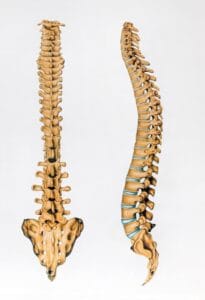
Spinal discs act as shock absorbers between the vertebrae. Each one has a tough outer layer and a gel-like center that keeps it flexible and able to handle daily compression from walking, sitting, and lifting. With age, repetitive strain, or old injuries, that center can lose water content and the disc flattens out. As it thins, the space between vertebrae narrows, which can put pressure on nearby nerves and joints.
This is why degenerative disc disease doesn’t always cause pain by itself. Plenty of people have disc degeneration show up on imaging with no symptoms at all. Pain tends to develop when the narrowing starts to irritate a nerve root, when the joints around the disc begin to compensate and become inflamed, or when the disc height loss changes how weight gets distributed across the spine.
Why Decompression Makes Sense for This Condition
Traditional treatment for disc degeneration often stops at pain management. Anti-inflammatories reduce symptoms, but they don’t do anything to address the disc itself. Spinal decompression takes a different approach by creating negative pressure inside the disc through slow, controlled traction. That negative pressure can pull in fluid, oxygen, and nutrients that the disc needs to stay hydrated and functional.
We use the DRX9000® Lumbar True Spinal Decompression™ Machine for this, which allows us to target a specific spinal level rather than applying generic traction to the whole lower back. During a session, the patient lies on the table while the machine cycles through gentle pulling and releasing phases. The disc gets brief windows of reduced pressure repeated throughout the session, which is different from just lying flat or stretching at home, since the machine can isolate the exact segment that’s degenerating.
What This Means for Nerve and Joint Pain
When a degenerating disc narrows the space it occupies, the nerve roots exiting the spine at that level have less room. Decompression therapy can restore some of that space temporarily during and after sessions, which reduces the irritation causing radiating pain down the leg or across the hip. Over a full course of treatment, many patients also notice improved joint mechanics in the surrounding vertebrae, since the added disc height takes some of the compensatory strain off nearby facet joints.
What a Course of Treatment Typically Involves
A proper evaluation comes first. This usually includes a review of symptoms, a physical exam, and often imaging to confirm which disc levels are affected and how significant the degeneration is. Not every case of disc degeneration responds the same way, and a chiropractor needs to rule out other causes of back pain, like spinal stenosis or facet joint arthritis, that can present with overlapping symptoms.
From there, treatment plans generally run over several weeks, with sessions spaced out to allow the disc tissue time to respond between visits. Decompression is frequently paired with corrective chiropractic adjustments to address alignment issues that may be contributing to uneven disc wear, along with targeted exercises to build support around the affected segment. Some patients also benefit from complementary care like hyperbaric oxygen therapy, which can support tissue healing during the same treatment window.
Managing Expectations
Decompression therapy won’t reverse years of disc wear entirely, and it isn’t a one-visit fix. What it can do is reduce nerve irritation, support the disc’s natural ability to stay hydrated, and take pressure off the structures around it, which for most patients translates into meaningfully less pain and better function over time. Degeneration that’s caught and managed early tends to respond better than cases where pain has been ignored for years.
If lower back pain or nerve symptoms have been part of your daily routine for a while, it’s worth having an actual evaluation rather than assuming it’s just something to live with. The team at Draper Chiropractor can determine whether your discs are the source of the problem and build a treatment plan around decompression, adjustments, or a combination suited to what’s actually going on in your spine. Schedule a consultation and get a clear picture of what’s causing your pain and what can realistically be done about it.
